
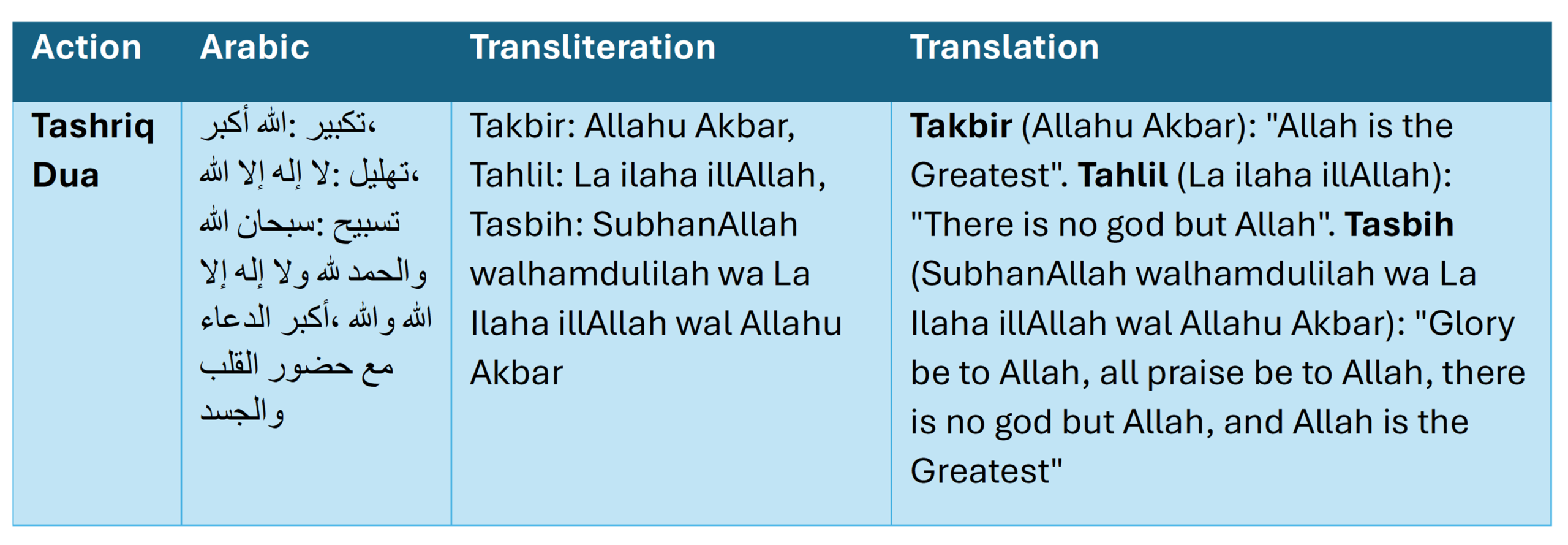
Tashriq Dua
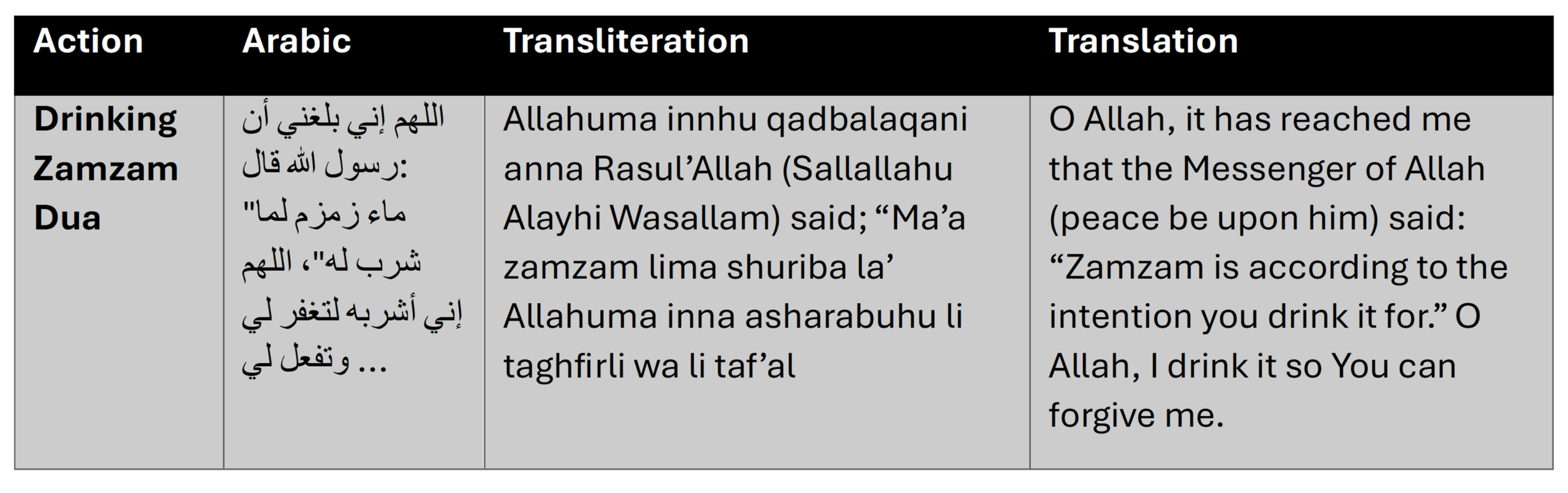
Drinking zamzam Dua
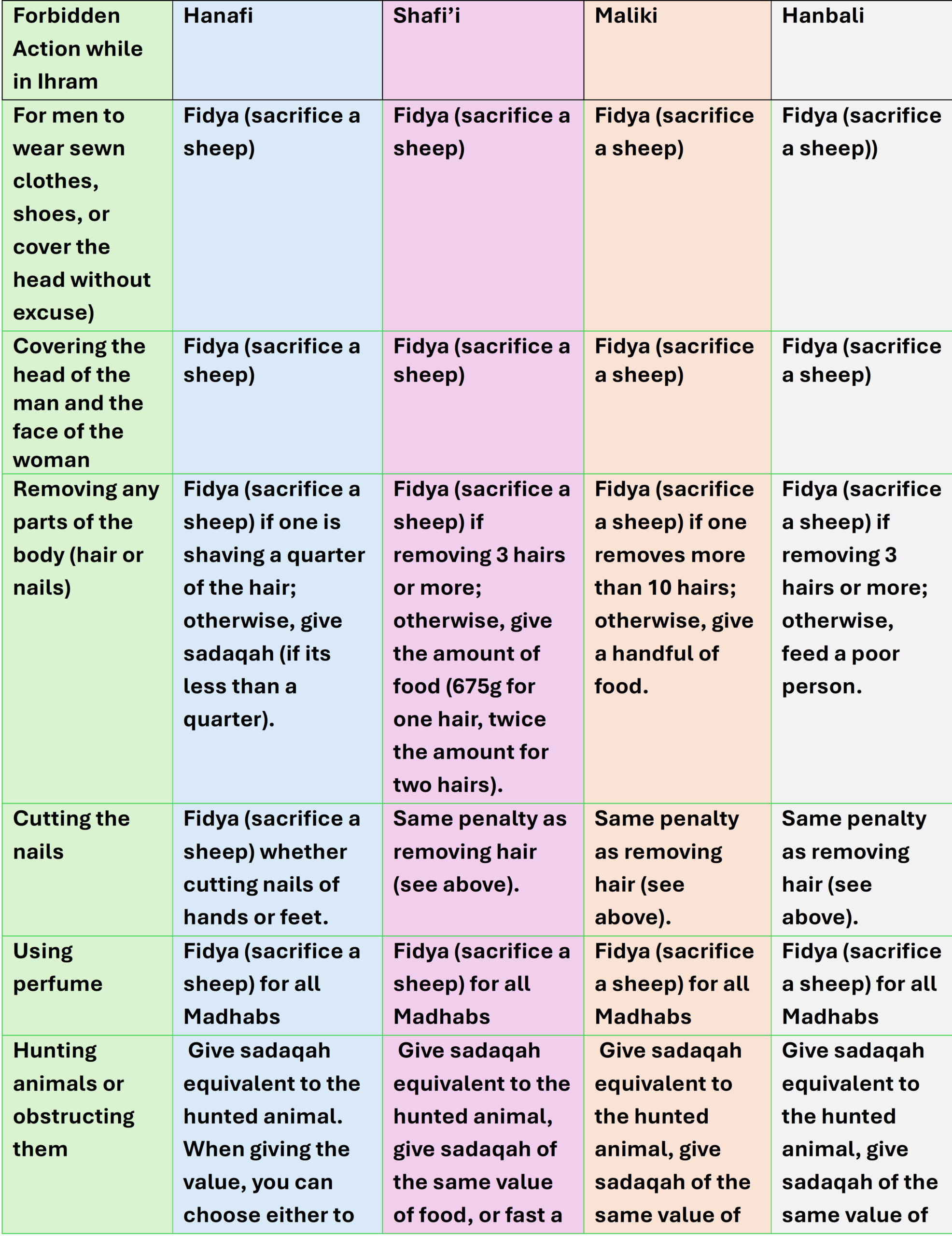
Forbidden Action While in Ihram
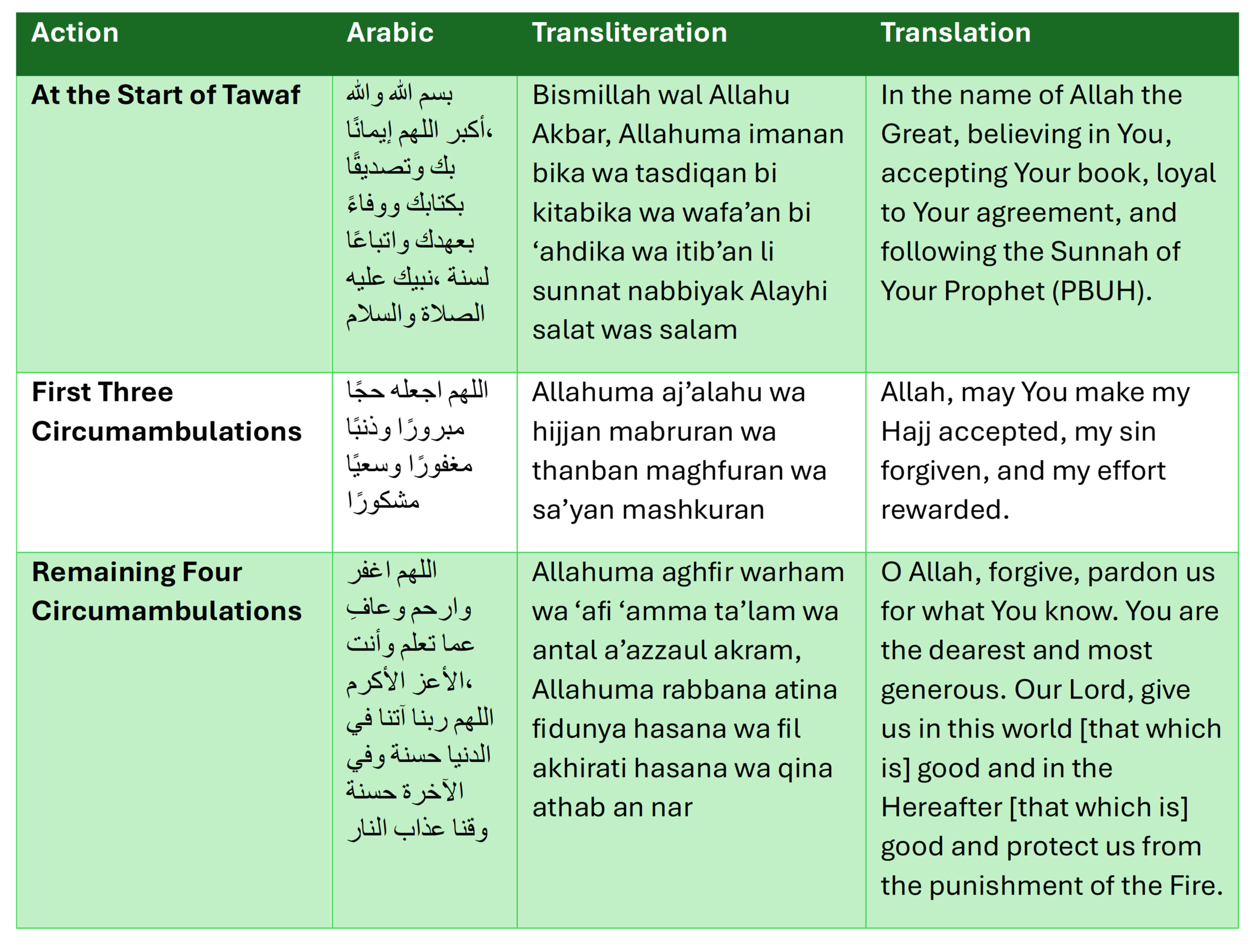
The Dua of the different stages of Hajj
During Ihram
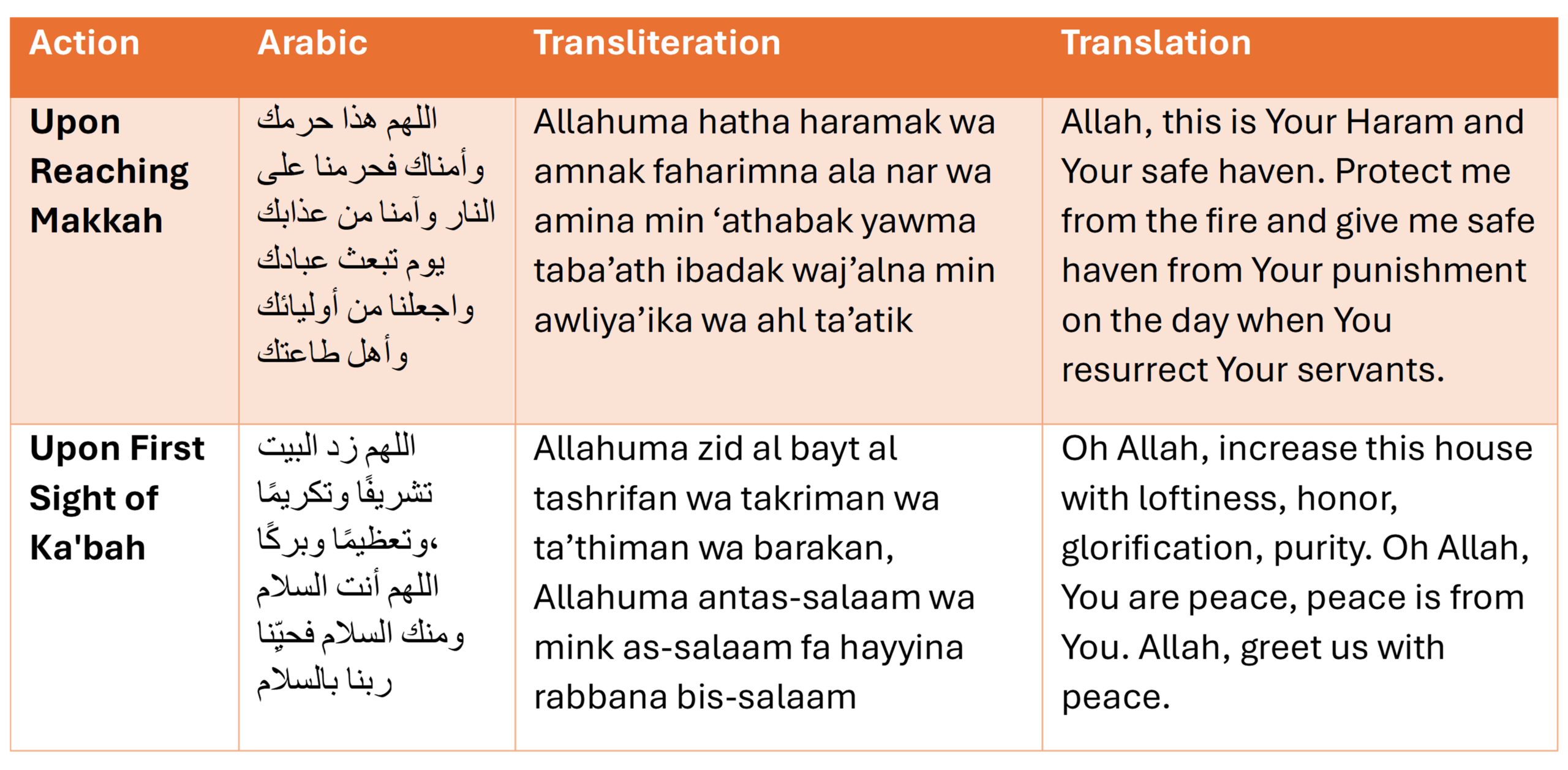
When Reaching Haram (Makkah)
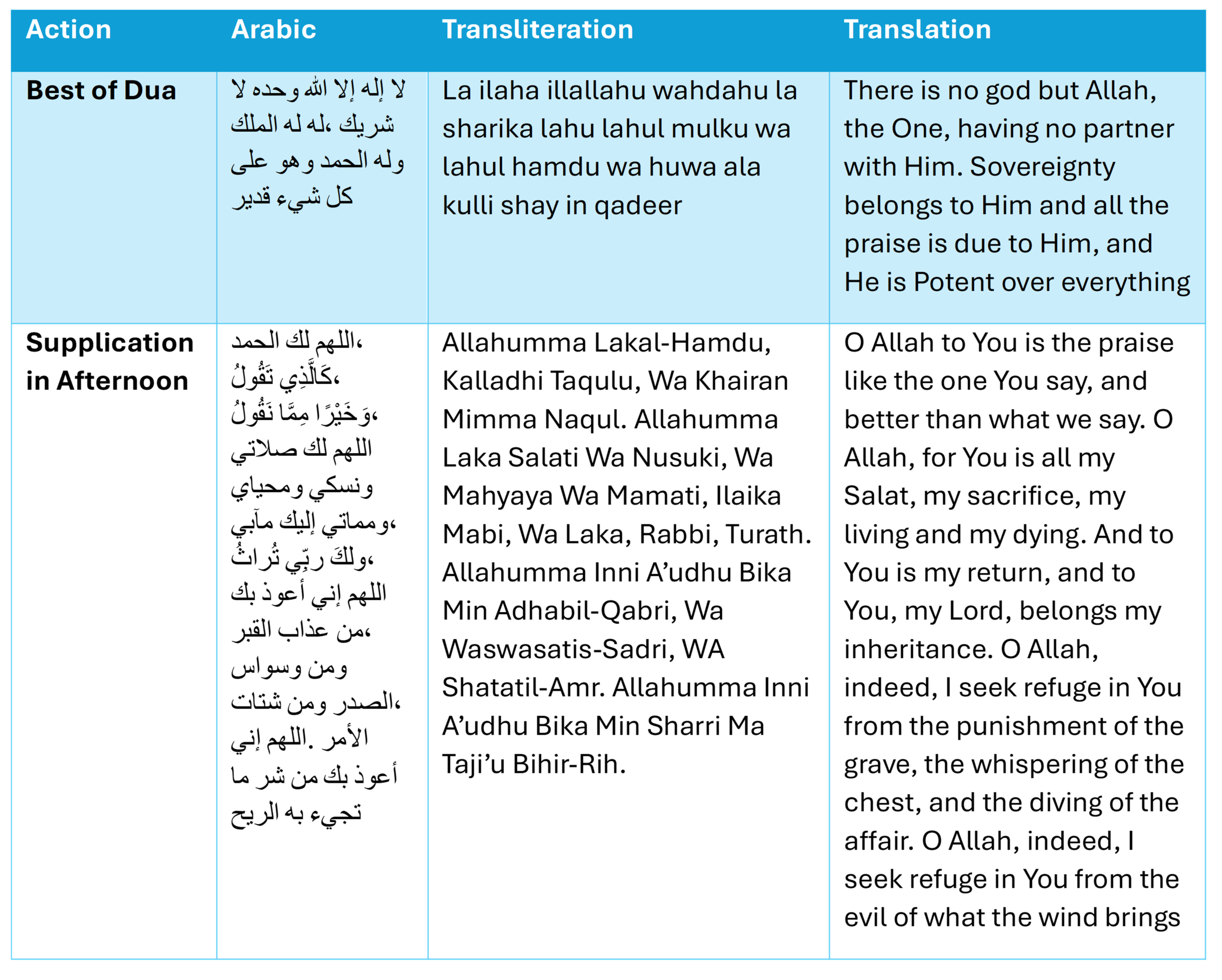
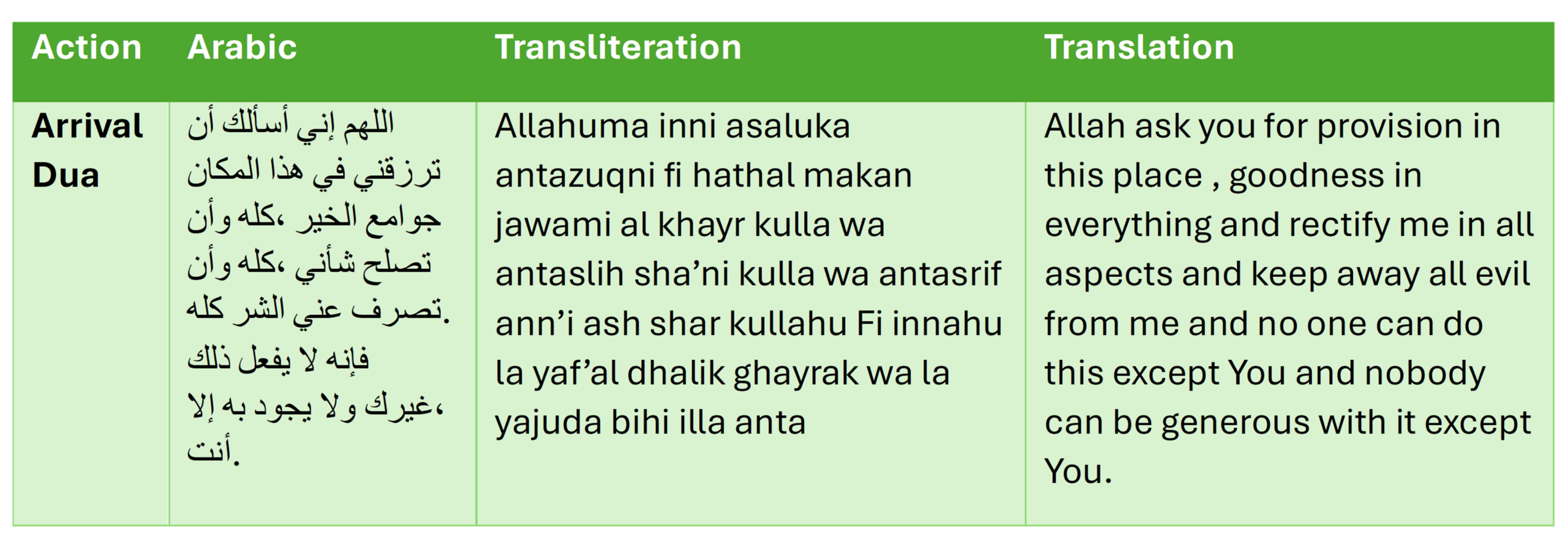
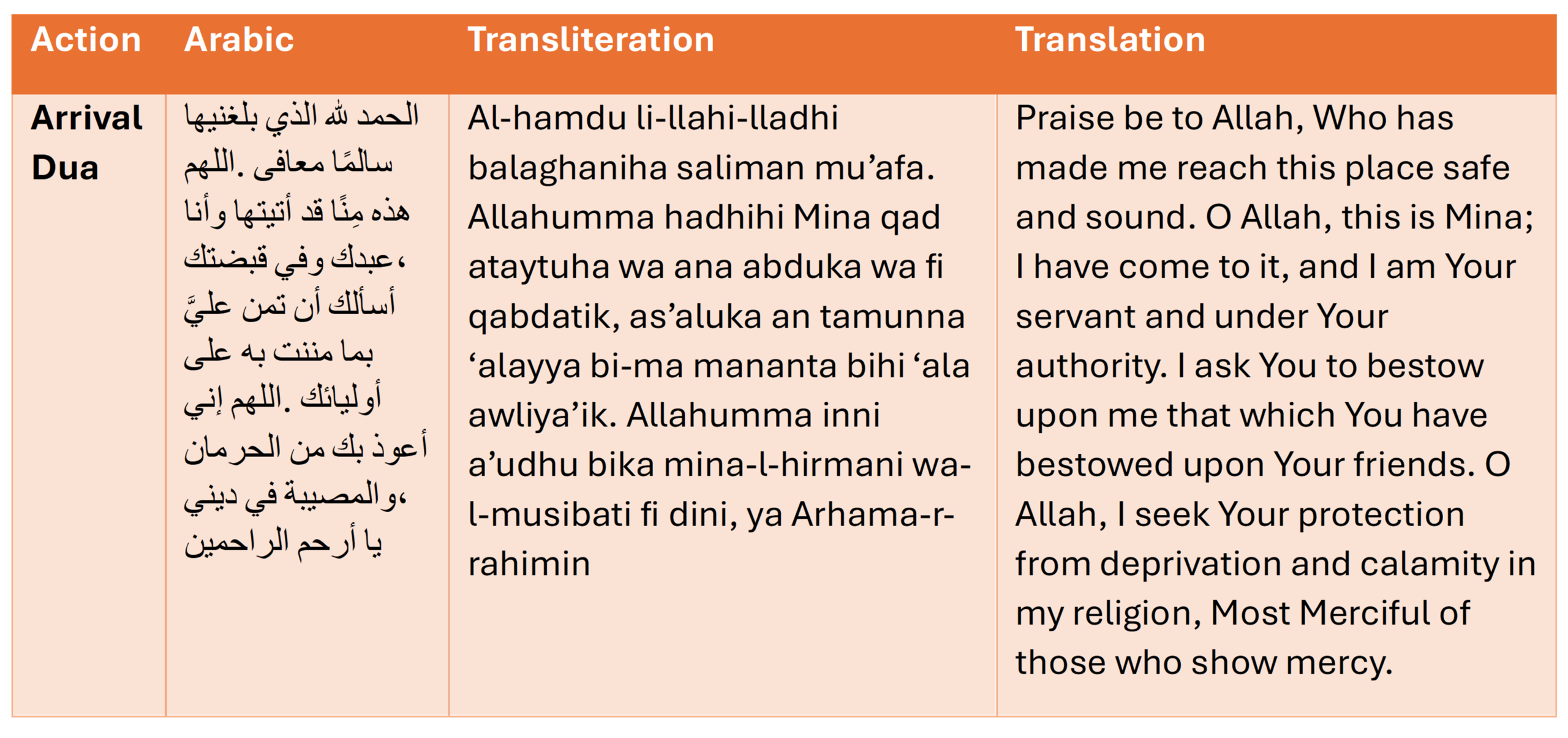
Actions of Hajj
When the pilgrim arrives in Muzdalifah, spending the night there is compulsory. It is Sunnah to follow these practices:
A. The pilgrim should stay in Muzdalifah until the time for the morning prayer and perform the morning prayer at its earliest time.
B. After the morning prayer, the pilgrim heads towards Mina, picking up pebbles from Muzdalifah on the way. The size of each of the seven pebbles should be slightly larger than chickpeas but smaller than beans.
Narrated by Ibn Abbas (RA): "The Prophet (peace be upon him) said, 'Pick up some pebbles for me.' Ibn Abbas (RA) said, 'I searched for small stones that were the size of beans or less, and when I put them in his hand, he (SAW) said, ‘Like these. Beware of going to extremes in religion, for those before you were destroyed because of going to extremes in religion.’” – Source: Sunan an-Nasa’I, Hadith 3009
C. The Pilgrim should stand beside Al-Mash’ar Al-Haram (a small mountain at the end of Muzdalifah). When reaching there, the pilgrim recites the following dua until they move from it.

“There is no blame on you for seeking the bounty of your Lord during this journey. When you return from ’Arafât, praise Allah near the sacred place and praise Him for having guided you, for surely before this guidance you were astray.” – Qur’an: Surah Baqarah 2:198
The pilgrims should continue to Mina while reciting the Talbiyah and making Dhikr until they reach Mina after sunrise.
Sunnah of Sa’i (Walking between Safa
and Marwa):
- It is Sunnah to perform Sa’i after Tawaf and the pilgrim should not perform another Sa’i after an additional Tawaf. If the pilgrim has already performed Sa’i after Tawaf Al-Qudum (the arrival circumambulation), it is Makruh (disliked) to perform another one after Tawaf Al-Ifadha [which is compulsory during Hajj].
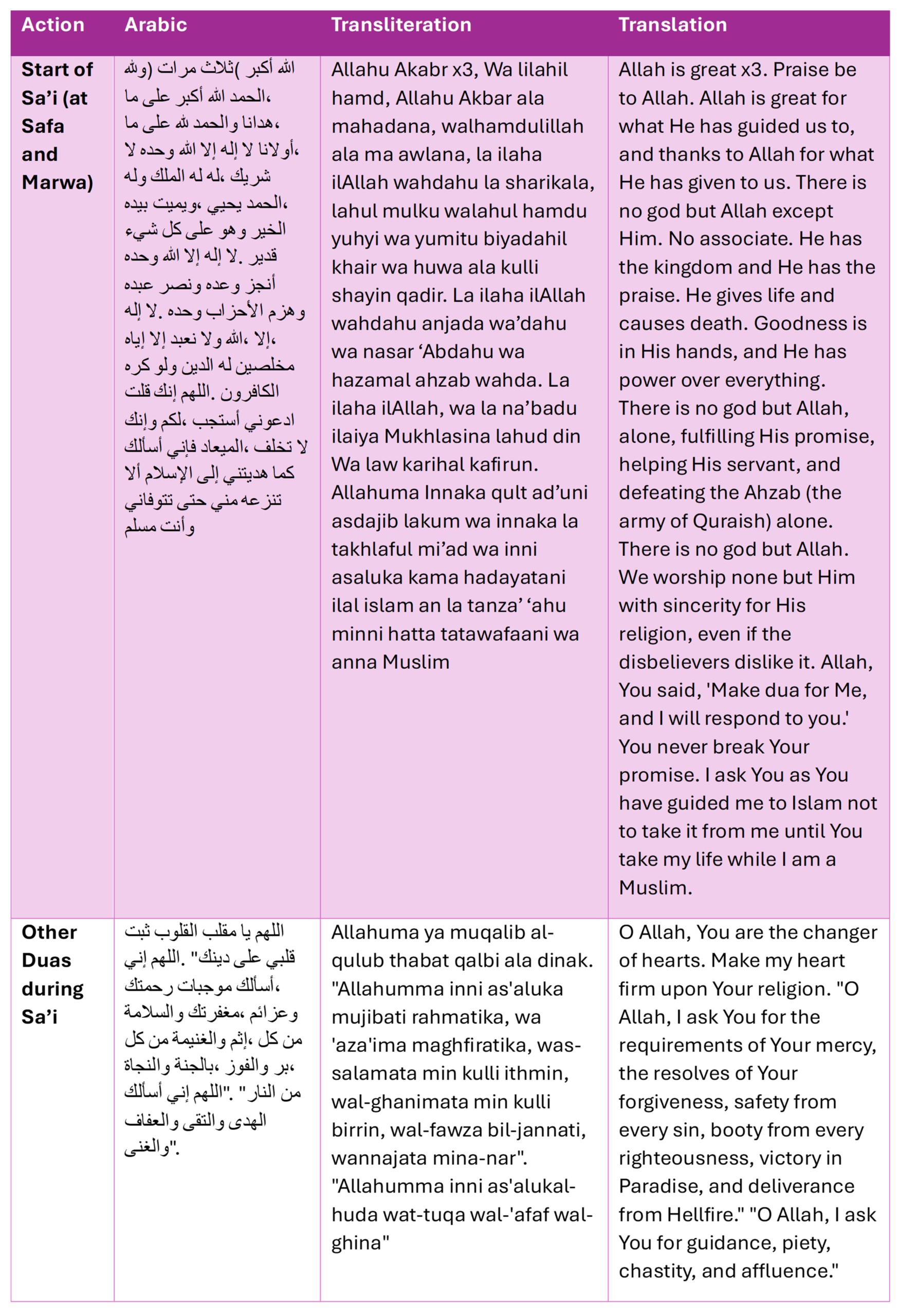
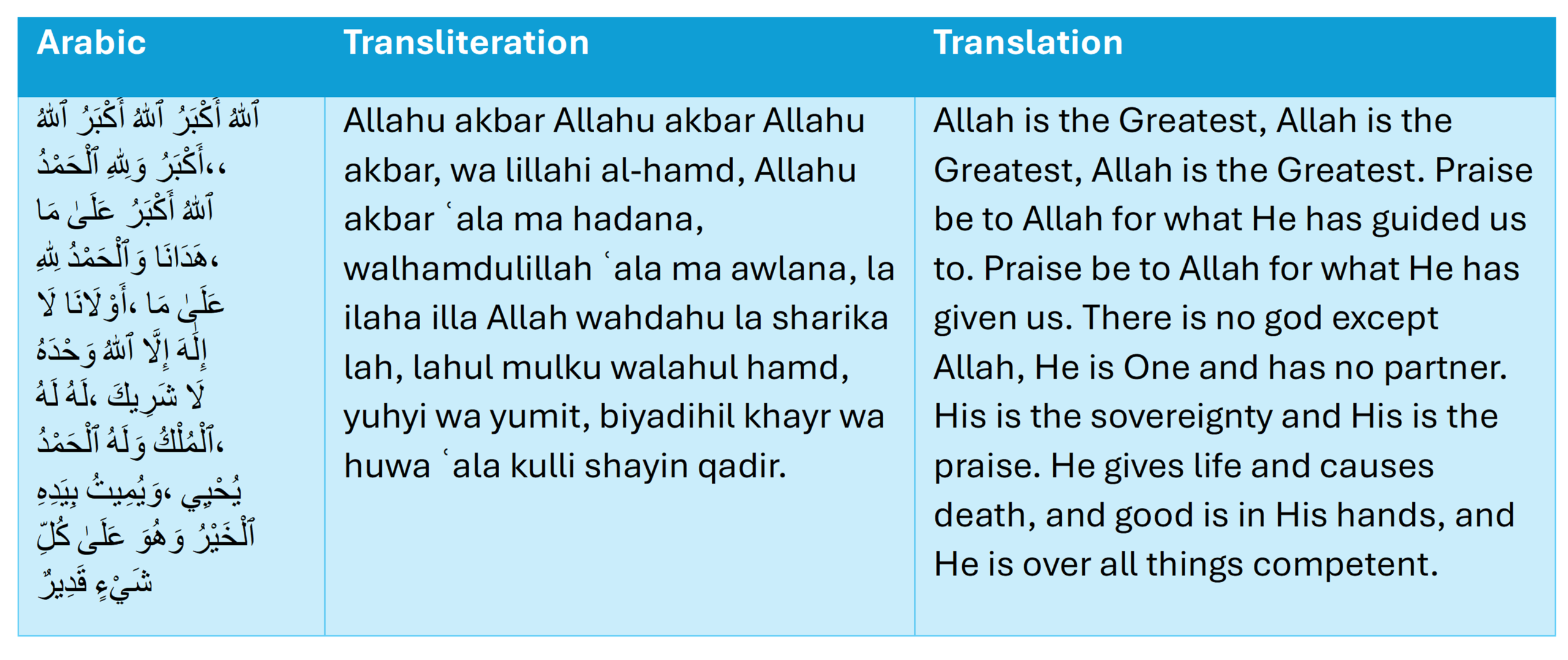
- The pilgrim should go first to the top of Al-Safa so they can see the Ka'bah (unless there is a barrier) and say the following dua when facing the Ka'bah:
- The pilgrim should perform Sa’i on foot: When the pilgrim reaches a marked place between these two points [Mount Safa and Marwa], it is Sunnah to speed up and make dua (supplication) while moving until they reach Safa and Marwa. The pilgrim should also make dua for themselves, their brothers, and other believers.
Dua 3: At the End of the Iraqi Corner
(before Hajr Aswad)
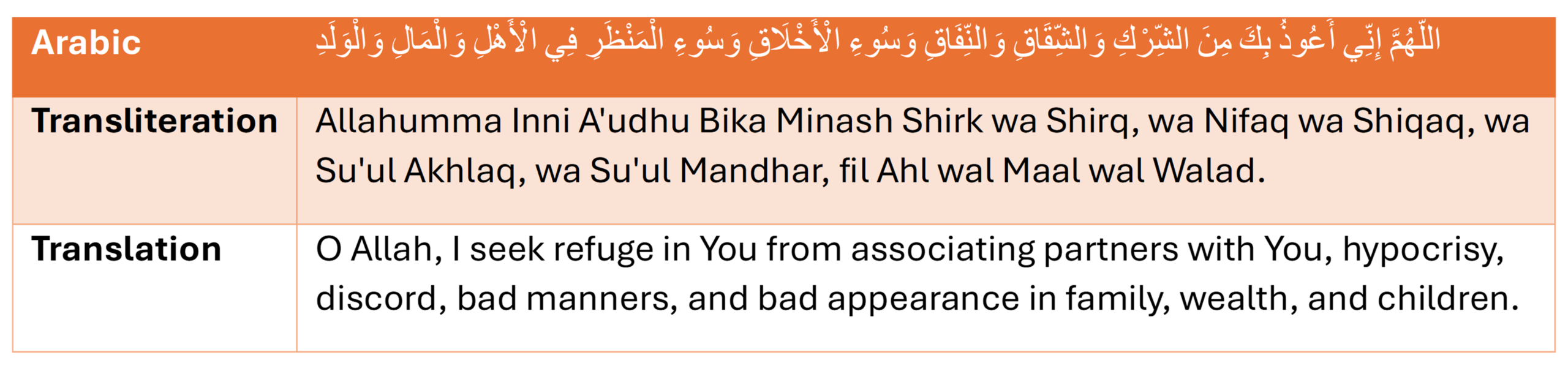
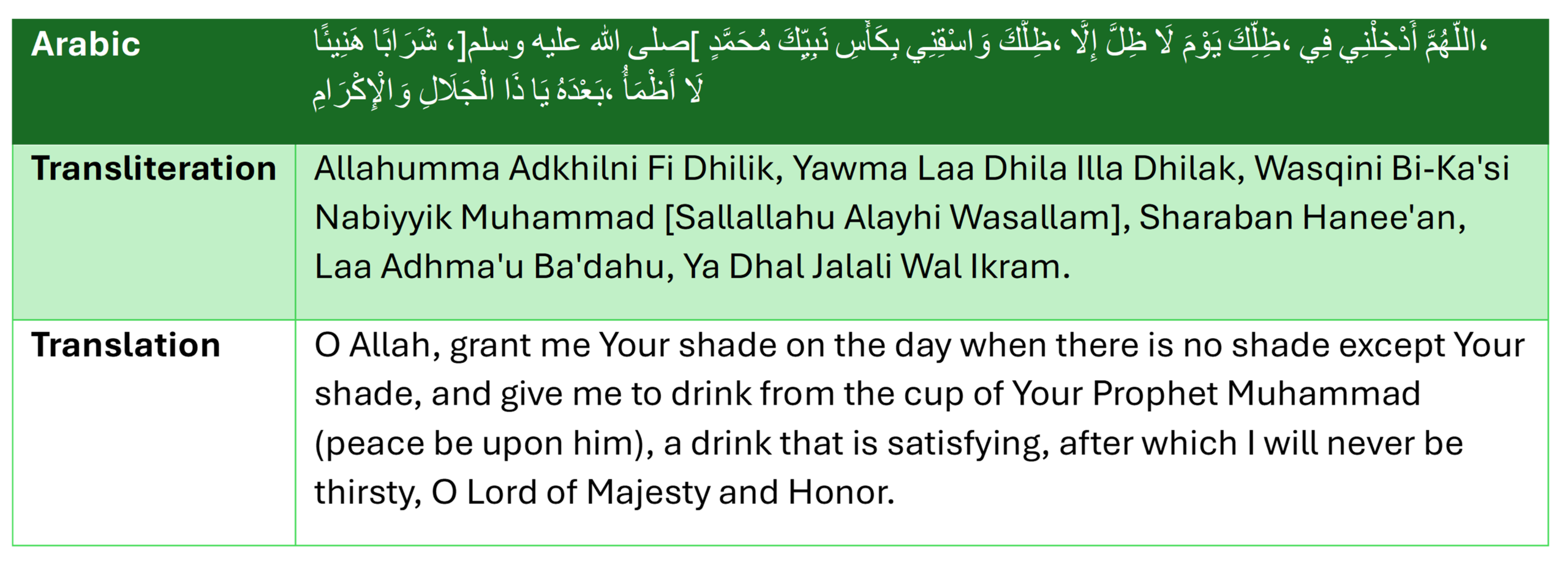
Dua 5: Between the Sham and Yemeni Corners
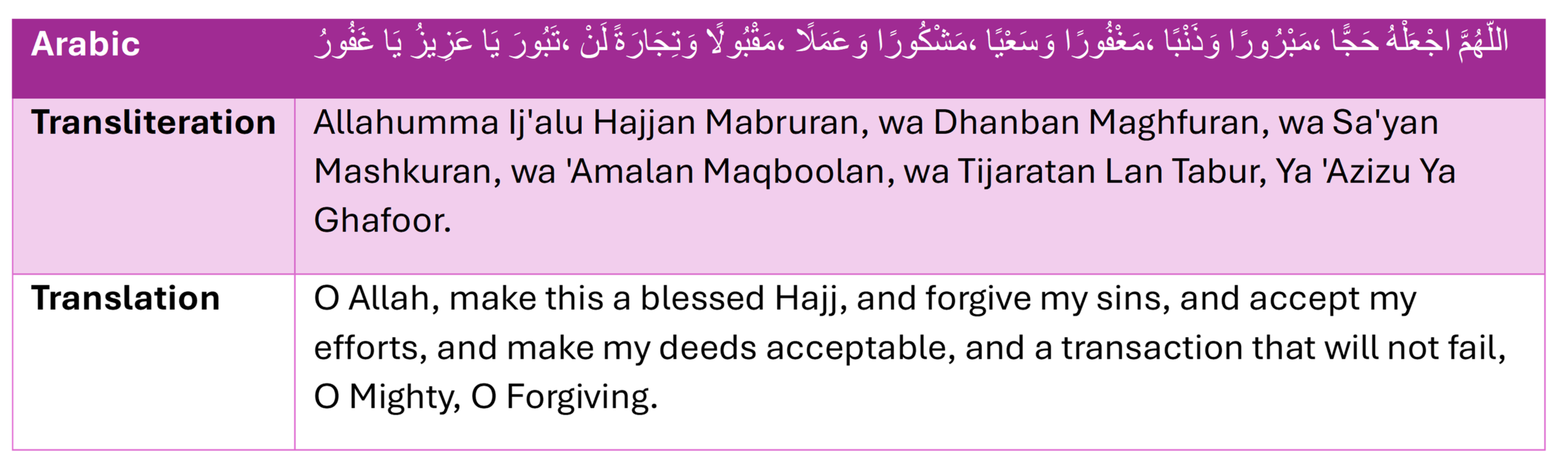
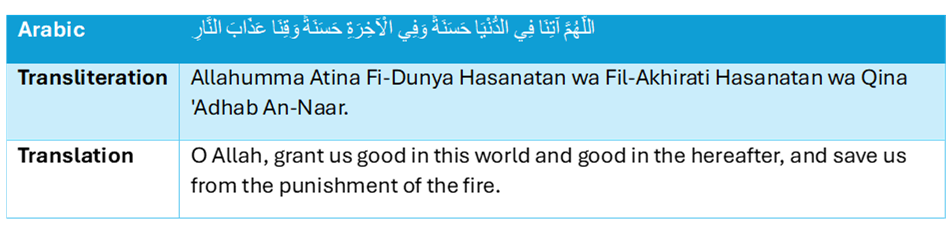
Note: Make any additional duas of your choice during Tawaf. The duas made by Rasul’Allah [peace be upon him] during Tawaf are highly recommended to follow.
Passing by Al Hajar Al Aswad
Passing by Al Hajar Al Aswad: During each circuit of Tawaf, if possible, kiss Al Hajar Al Aswad or, alternatively, kiss it after completing Tawaf or after performing the two Rak’ats Sunnah of Tawaf behind the Maqam of Sayyiduna Ibrahim (AS). It is Sunnah to repeatedly pass and kiss the Black Stone after completing each Tawaf
Sunnah of Entering Makkah:
As the Hajj approaches, it is Sunnah to adhere to the following practices upon entering Makkah:
- Enter Makkah before proceeding to Arafah and then head to Arafah from there.
- Perform Ghusl as one enters Makkah near the well of Thi Dhool, which is known to be a well the Prophet (peace be upon him) used to wash with its water before entering Makkah.
- To perform Tawaf Al-Qudoom (Arrival Tawaf)upon entering Makkah as a greeting to the Ka'bah [Tahiya], a practice the Prophet (SAW) ensured to observe.
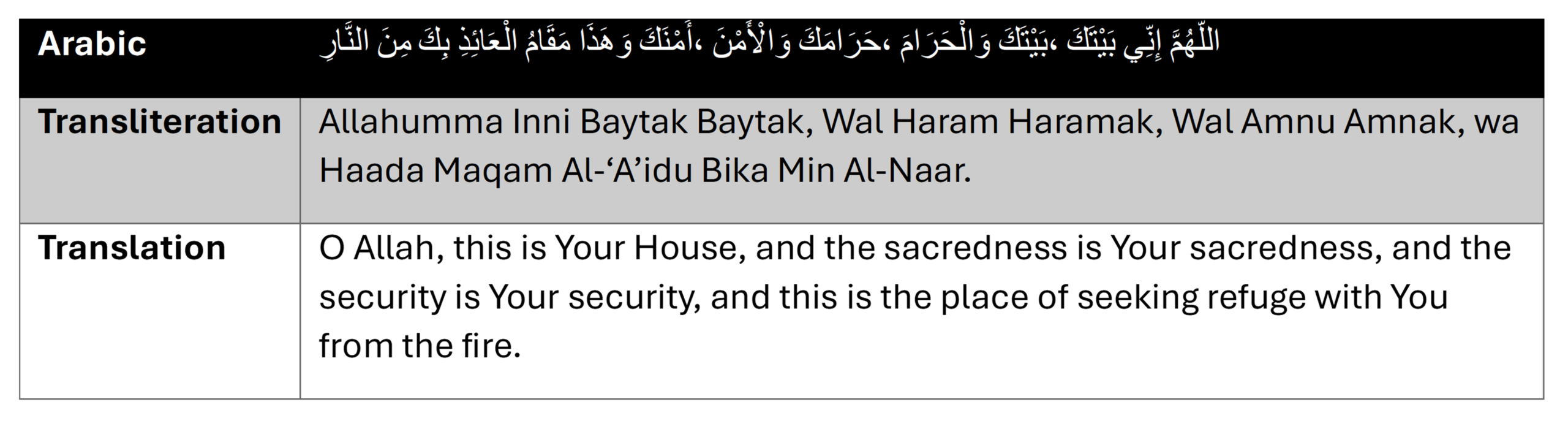
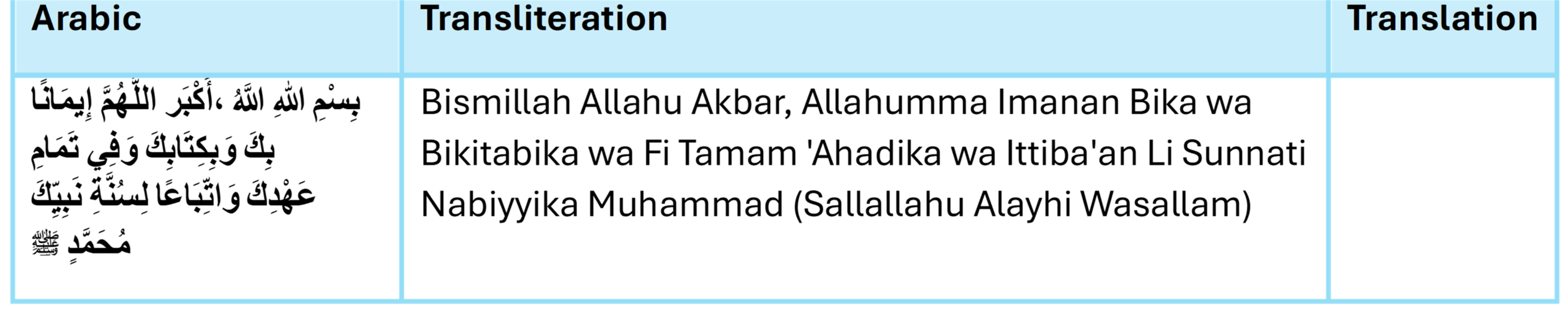
- Entering the Mosque from Bani Shayba Gate.Upon seeing the Ka'bah, the pilfrim should raise your hands and recite this dua:
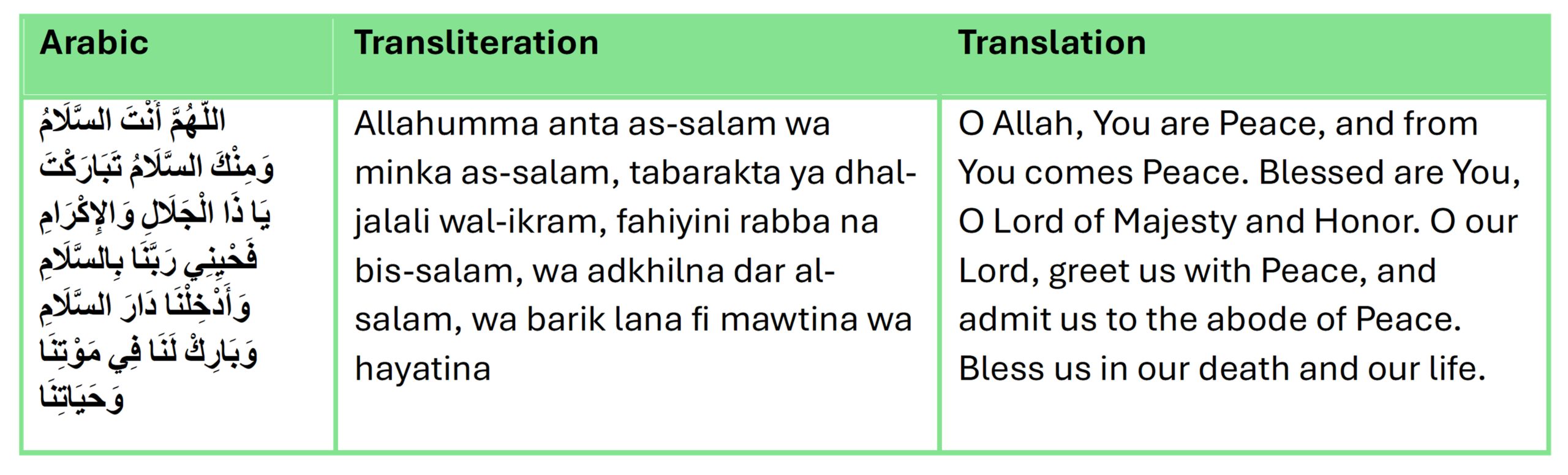

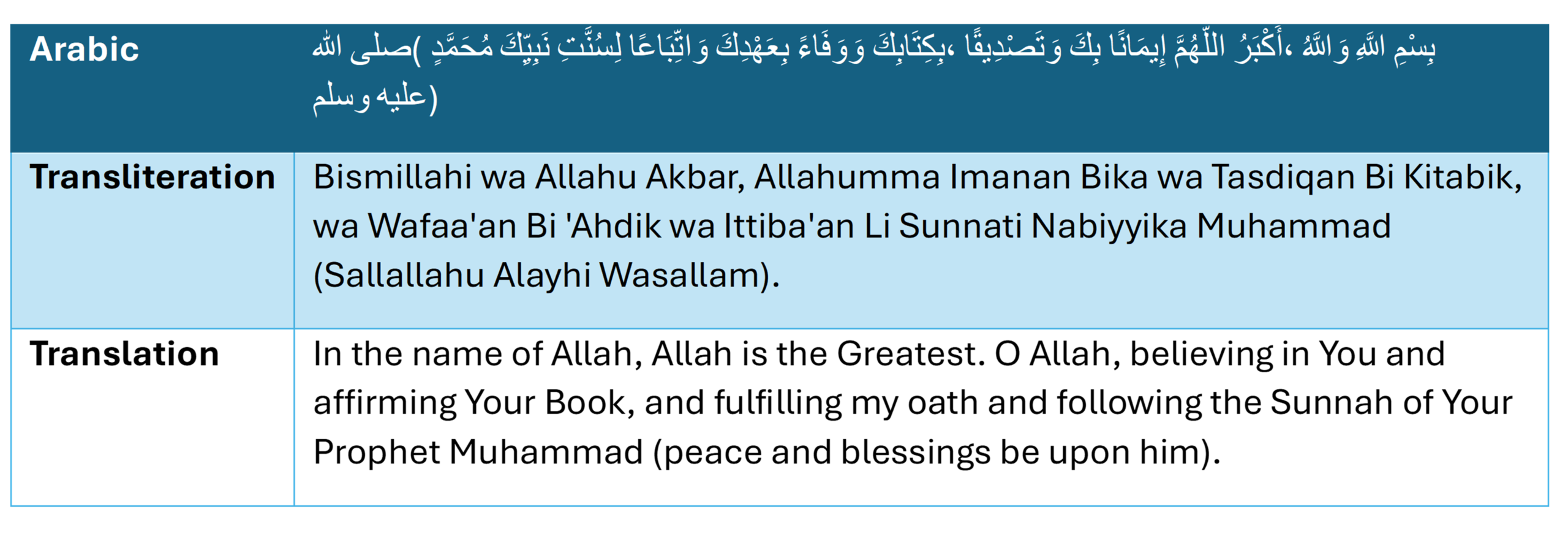
- Ghusl (Washing) Before Ihram: Perform Ghusl (full body wash) before going into Ihram. If Ghusl is not possible, perform Tayammum (dry purification). This includes thorough personal hygiene such as rmeoving hair from private parts, trimming nails, and removing any dirt. Ghusl is Sunnah for all Hajis, including women, regardless of menstruation or postpartum conditions.
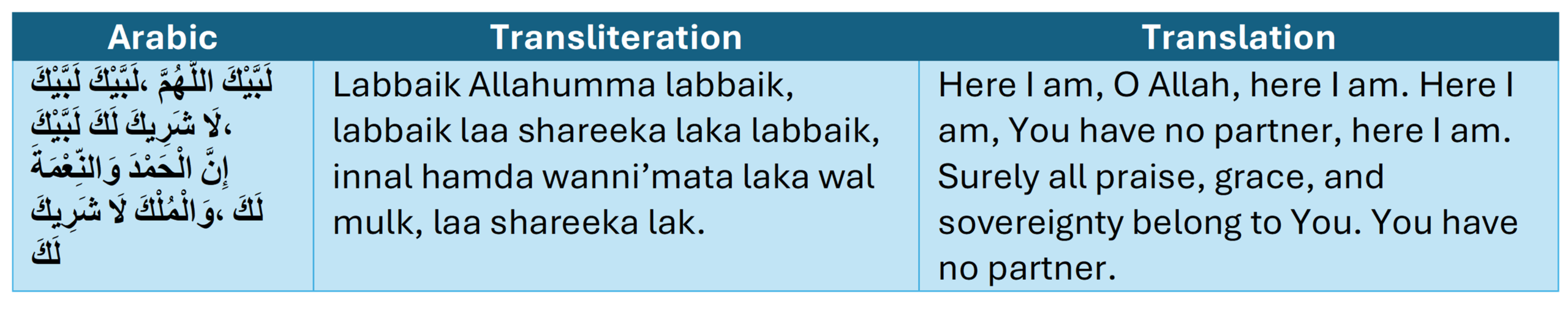
- Declaration of Intention: Declare your intention verbally and follow it with the Talbiyah. Men should recite this loudly whether standing or sitting.
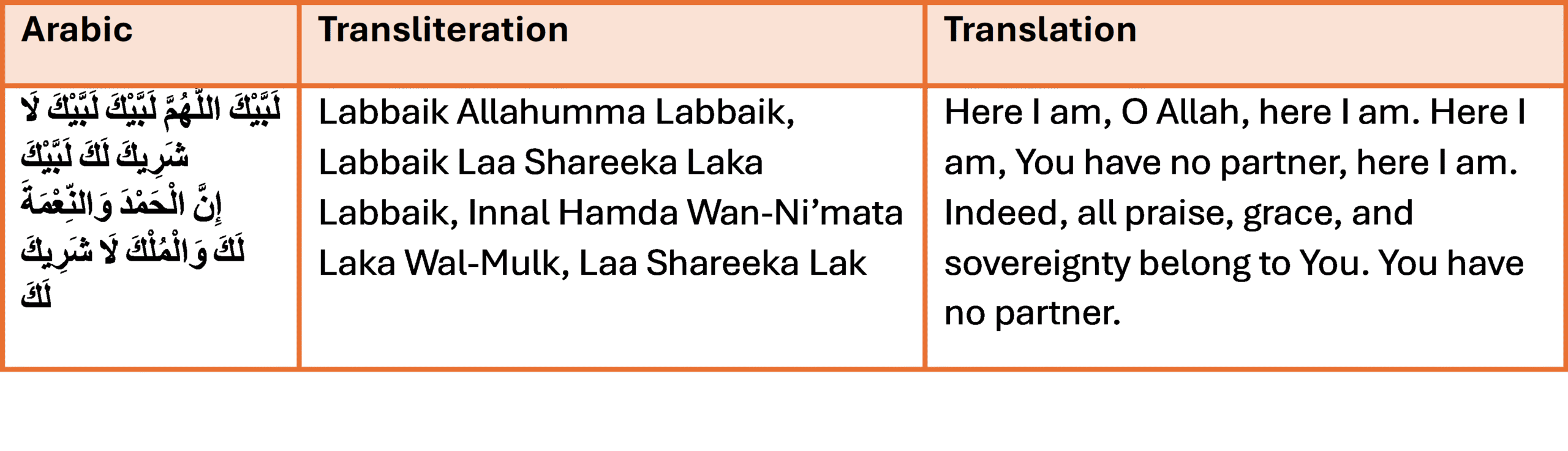
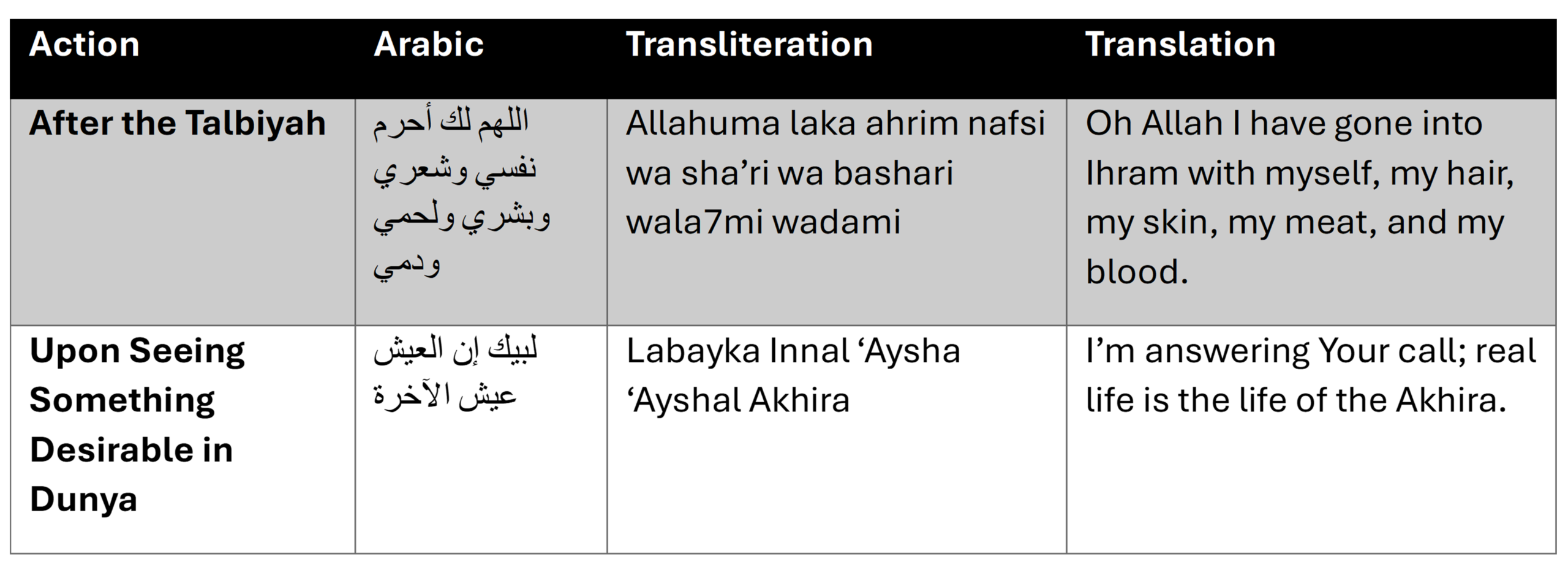
Narrated by 'Aisha (RA): Rasul’Allah (SAW) mentioned that Jibril (AS) instructed him to tell his companions to raise their voices during Talbiyah, which is recommended (mustahab) until the stoning of Aqabah Al-Kubra on the morning of the Day of Sacrifice (Eid). The pilgrim should face the Qiblah while in Ihram and recite: "Allahuma Ahram Laka Sha’ri Wa Bashari, Al-Lahmi Wa Tammi" (O Allah, my hair, my skin, my flesh, my blood have gone into Ihram for You). However, it is Sunnah for women to recite the Talbiyah quietly so that only they hear it. – Source: Sahih al-Bukhari, Hadith 3667 and 3668
Ibn Malik [may Allah be pleased with him] said: The Messenger of Allah (peace be upon him) said: "There will come a time when the rich of my ummah will make pilgrimages for a picnic, their circles for trade, their readers for hypocrisy and reputation, and their poor for the matter." – Source: Imam al-Suyuti narrated in the Great Mosque and al-Khatib al-Baghdadi and al-Dailami
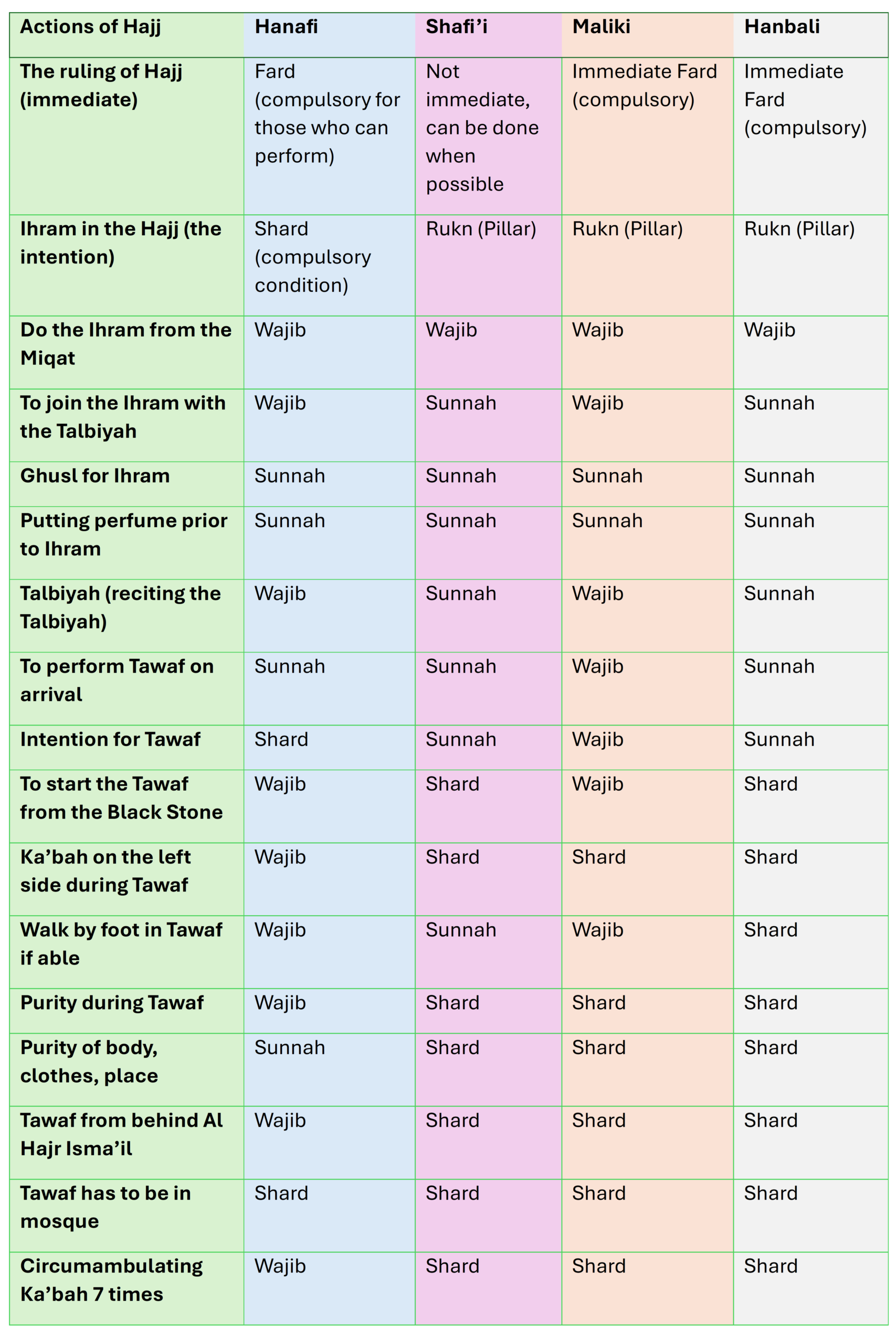
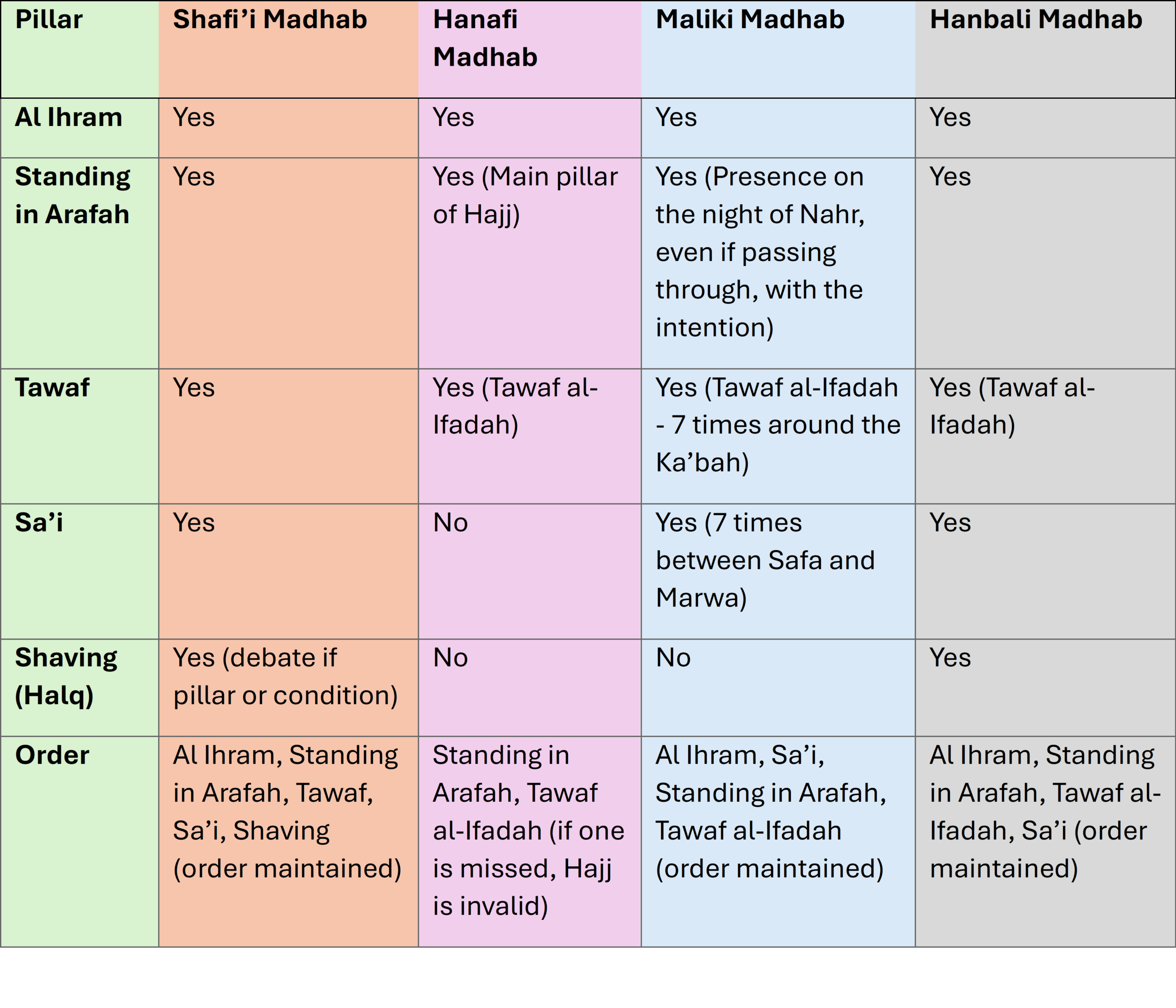
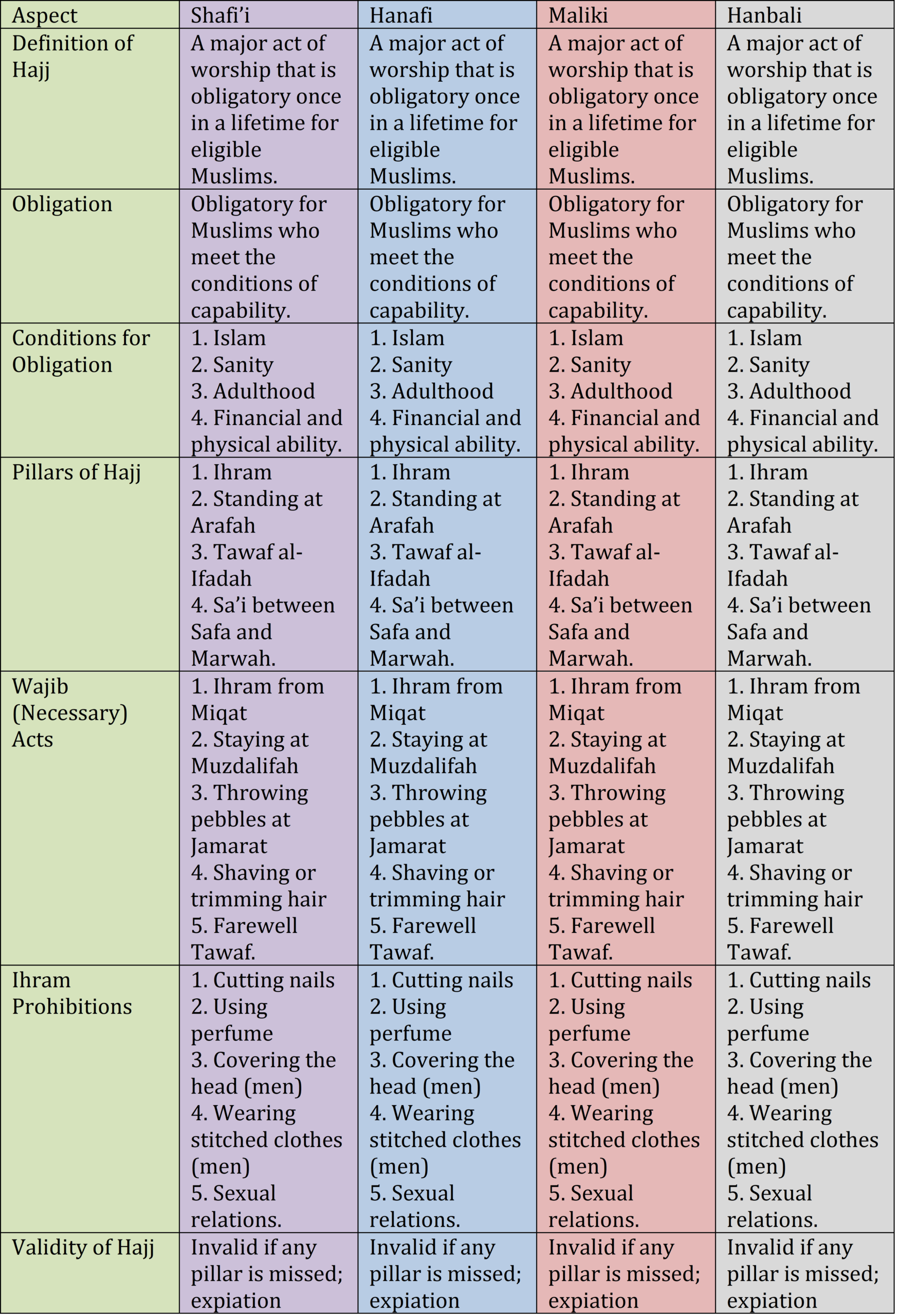
Summary of Comparison of Hajj Pillars in Different Madhabs
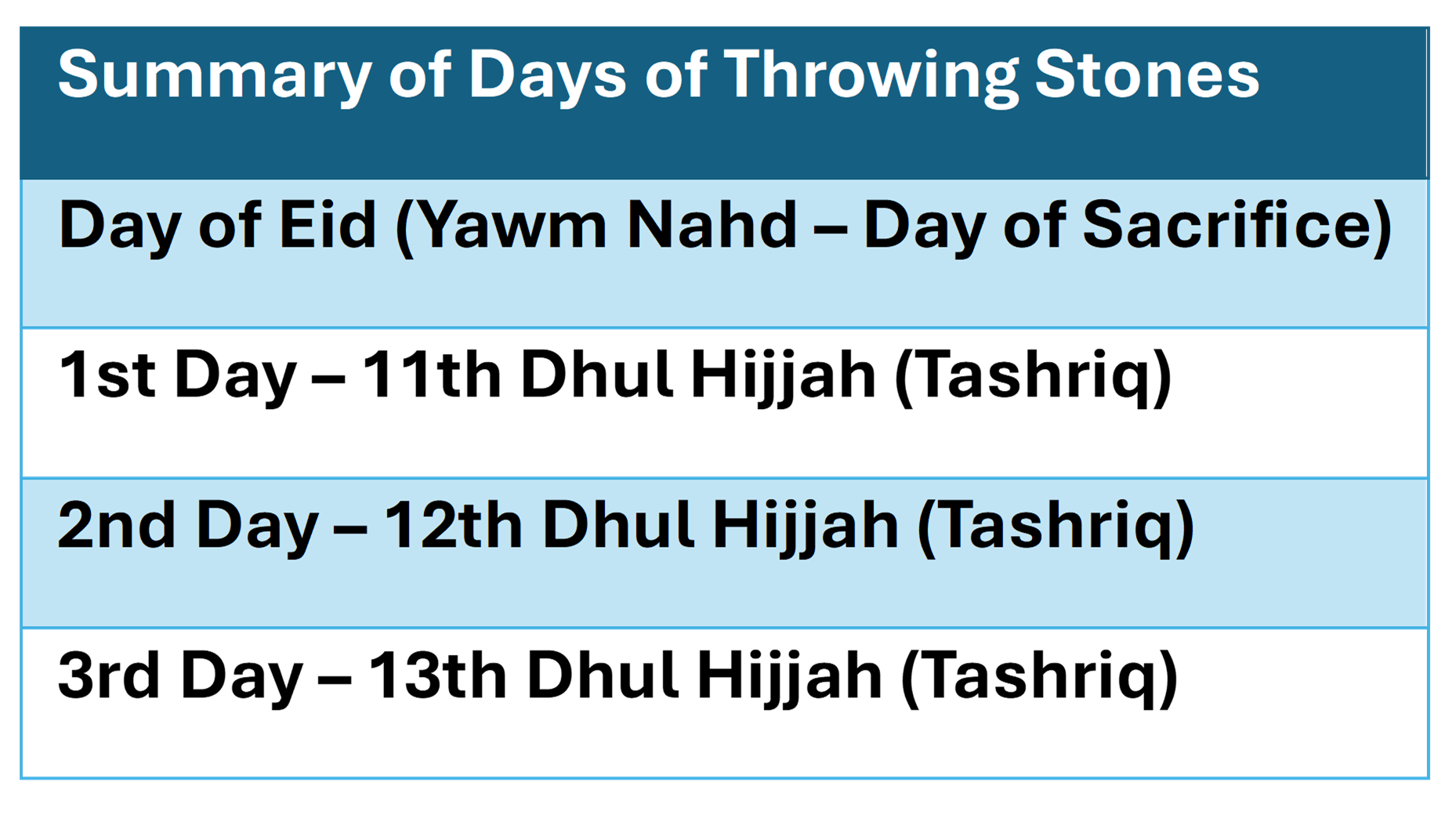
Summary of pebbles thrown: The total number of pebbles thrown over the days amounts to 70 or 49, depending on when the pilgrim departs.
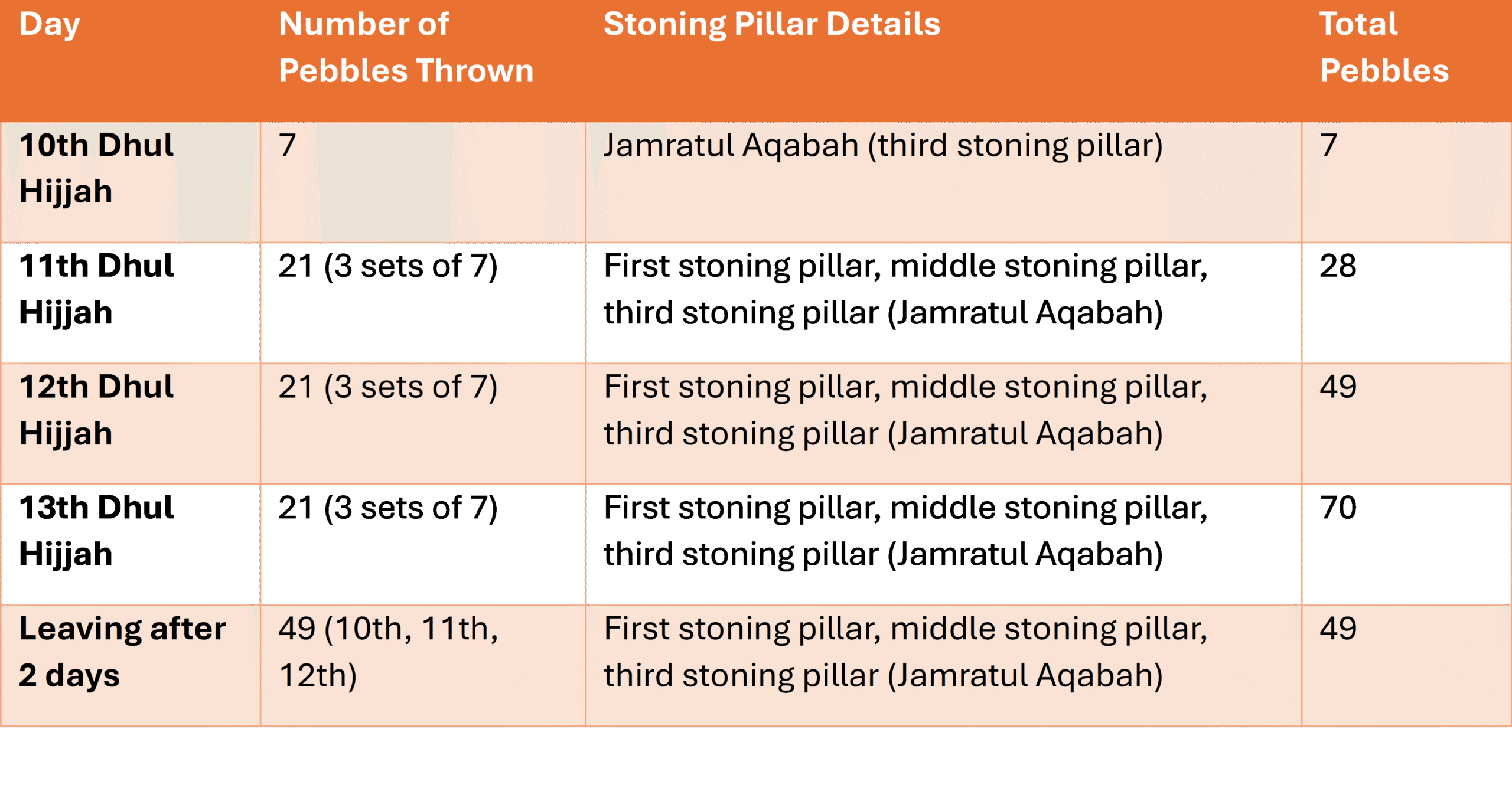
And remember Allah during ˹these˺ appointed days.1 Whoever departs swiftly on the second day is not sinful, neither are those who stay behind ˹till the third—seeking additional reward˺, so long as they are mindful ˹of their Lord˺. And be mindful of Allah, and know that to Him you will ˹all˺ be gathered. – Qur’an: [Surah al-Baqarah: 2:203]
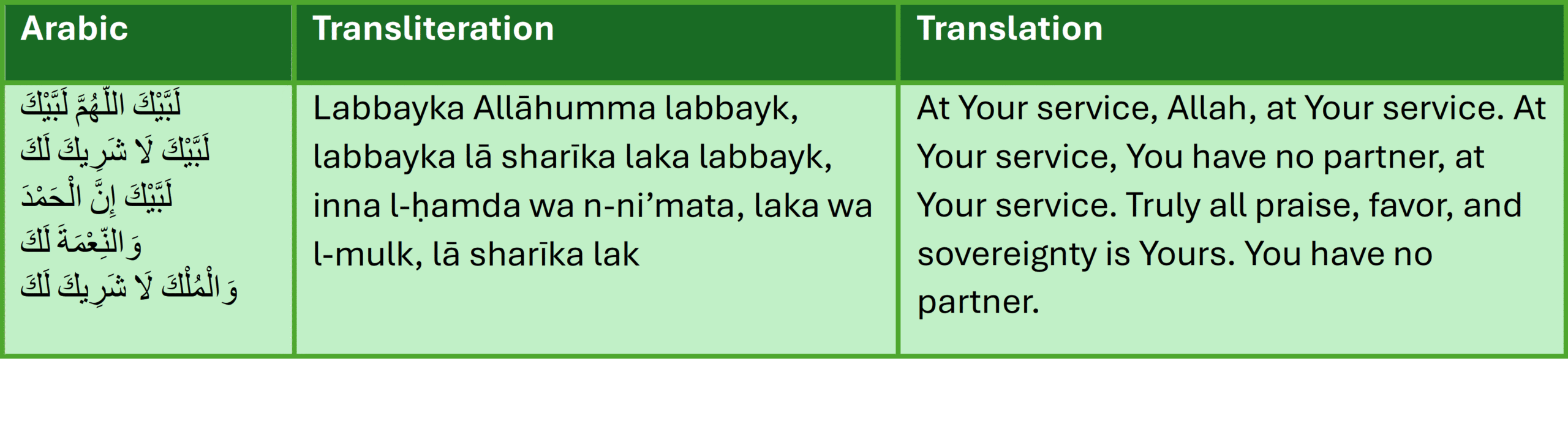

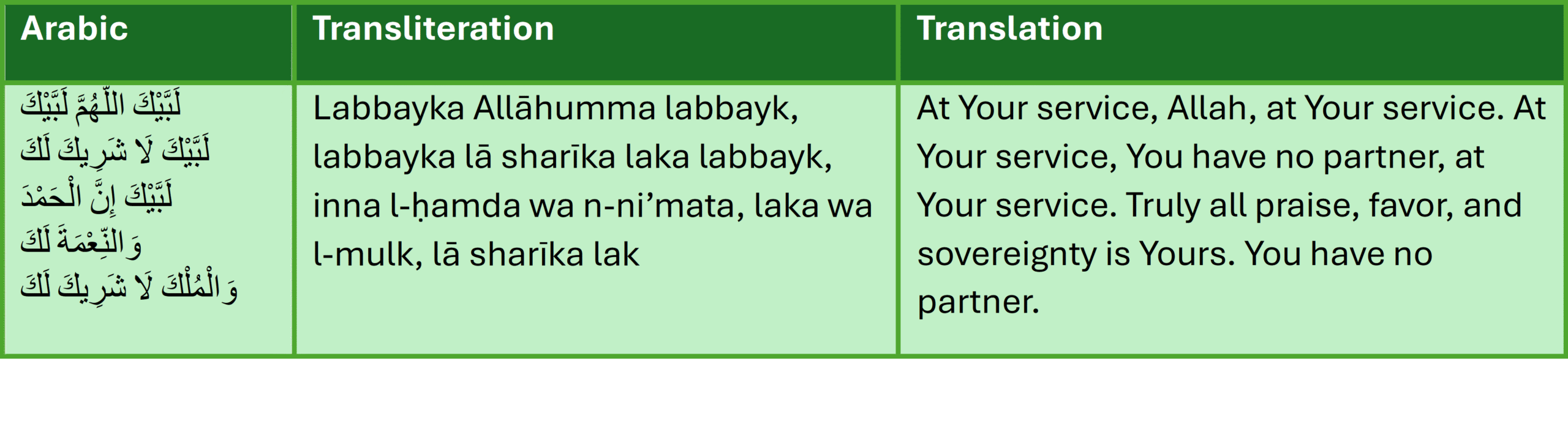
Talbiyah
Then one should recite the Talbiyah
Timetable
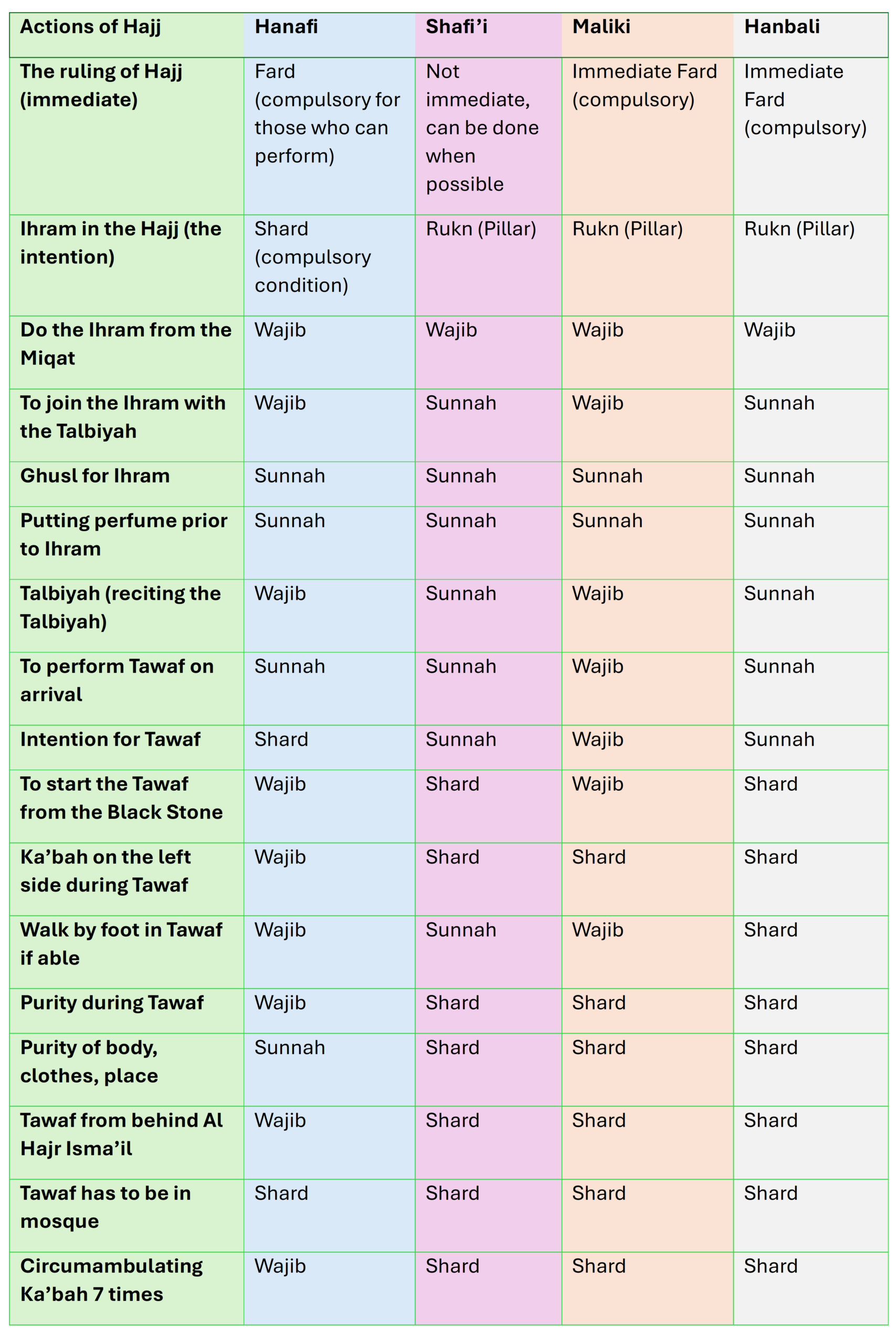
Comparison
of Hajj Actions According to the Four Madhabs
Dua' To Be Recited
